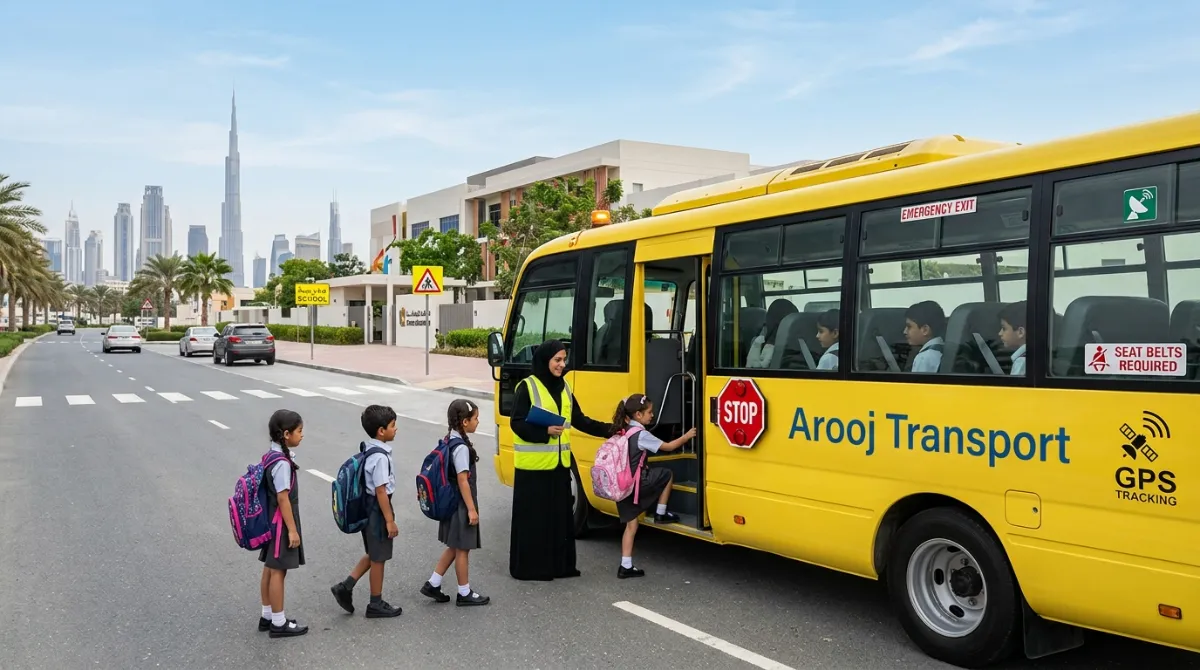
School transport is an important part of daily life for thousands of students across the UAE. A safe school bus is not only about having a good vehicle. It also depends on trained drivers, responsible attendants, regular inspections, safety equipment, proper student management, and compliance with local transport regulations.
The UAE has established school transportation requirements to help schools, operators, drivers, parents, and students follow safer transport practices. Dubai, Abu Dhabi, and other emirates may have their own local procedures and requirements, so schools and operators should always check the rules of the relevant authority.
This guide explains the main school transport safety standards and regulations in UAE, including school bus requirements, driver and attendant responsibilities, inspections, safety equipment, student boarding, and emergency procedures.
What Are the School Transport Regulations in UAE?
School transport regulations in the UAE are designed to make student journeys safer from pickup to drop-off. They cover areas such as vehicle condition, driver requirements, bus safety equipment, permits, inspections, student supervision, and operating procedures.
In Dubai, the Roads and Transport Authority (RTA) maintains specific legislation for school transportation, including Regulation No. (2) of 2008 and later amendments. RTA also publishes requirements and procedures for school transport operators.
At the federal level, schools also operate within wider UAE education and child-safety requirements. Local education and transport authorities can apply additional rules within their emirates.
School Bus Safety Standards UAE
A school bus should meet the applicable technical and safety requirements before it is used to transport students.
Important areas covered by school bus safety standards include:
- Proper passenger seating
- Seat belts where required
- Safe doors and emergency exits
- First-aid equipment
- Fire extinguishers
- Suitable interior design
- Safe storage for student bags
- Adequate cooling and ventilation
- Non-slip flooring
- Clear school bus identification
- Safety and warning equipment
- Regular vehicle inspections
For example, Dubai's published school transport requirements include safety equipment such as first-aid supplies and fire extinguishers, along with technical requirements for school buses.
Dubai School Bus Regulations
Dubai has detailed school bus regulations administered through the RTA. These rules cover both school transport operators and the vehicles used for student transportation.
RTA's public transport legislation includes the Dubai regulation governing school transportation and later amendments.
For the 2026–2027 academic year, RTA has also required school bus operators to ensure vehicle readiness, complete safety checks, follow operating procedures, and maintain valid permits for drivers and bus attendants. RTA announced a 30-day intensive school bus inspection campaign across Dubai.
This shows why schools and operators should check their vehicles and documentation before each academic year rather than relying only on previous inspections.
Abu Dhabi School Transport Regulations
School transport in Abu Dhabi is also subject to local requirements and safety procedures. Abu Dhabi authorities use licensing, inspection, monitoring, and technology to support safe student transportation.
Parents and schools can also benefit from digital monitoring systems. Abu Dhabi's school transport system includes features that can provide information such as bus trip monitoring, boarding and disembarking records, estimated arrival times, and driver or supervisor details.
Because requirements can change, schools and operators should check the latest requirements issued by the relevant Abu Dhabi authority before operating school transport.
School Bus Requirements UAE
A school bus should be selected and maintained according to the number and needs of students using it.
Common school bus requirements in UAE include:
1. Safe Seating
Seats should be properly installed and arranged according to the approved vehicle specifications. Operators should not add unauthorized seats simply to carry more students.
2. Seat Belts
Seat belts are an important part of school bus safety. RTA stated in its 2026 school transport safety measures that seat belt use is mandatory in school buses in Dubai.
Additional requirements can apply to nursery buses and certain vehicles carrying younger children.
3. Emergency Exits
School buses should have suitable emergency exits and safety arrangements that allow students to leave the vehicle safely during an emergency.
4. First-Aid Equipment
A suitable first-aid kit should be available on the bus. Dubai's published school transport specifications include first-aid requirements based on the number of seats.
5. Fire Extinguisher
School buses should carry the required fire safety equipment. Dubai's published requirements specify a fire extinguisher as part of the bus safety standards.
6. Safe Interior
Sharp or dangerous objects should not create unnecessary risks inside the bus. Floors, doors, seats, storage areas, and other interior components should be maintained in safe condition.
7. Cooling and Ventilation
Because UAE temperatures can be very high, proper air conditioning is an important part of student comfort and safe operation. Dubai's published school transport requirements specify cooling requirements for school buses.
School Bus Driver Requirements UAE
The driver plays a major role in school transportation safety in UAE. Safe driving is only one part of the responsibility. Drivers must also follow the applicable school transport procedures and traffic rules.
Important areas include:
- Valid driving and school transport permits where required
- Appropriate training
- Safe driving practices
- Following approved routes and operating procedures
- Careful stopping and starting
- Safe student boarding and drop-off
- Following speed limits
- Paying attention around schools and bus stops
- Knowing emergency procedures
RTA has also highlighted driver training and safe professional behaviour when dealing with students.
School Bus Attendant Requirements UAE
A school bus attendant or supervisor can help manage students during the journey.
The attendant's responsibilities can include:
- Supervising students inside the bus
- Helping students board and leave safely
- Following school transport procedures
- Monitoring student behaviour
- Supporting younger children
- Communicating safety instructions
- Assisting during emergencies
- Helping ensure students reach the correct drop-off point
RTA's 2026 school transport preparations specifically include checking the validity of permits for drivers and bus attendants.
School Bus Inspection Dubai
Regular inspection is an important part of school bus safety.
A school bus inspection may consider the condition of:
- Brakes and tyres
- Doors
- Seats
- Seat belts
- Emergency exits
- Fire safety equipment
- First-aid equipment
- Warning systems
- School bus markings
- Safety-related equipment
- General vehicle condition
For the 2026–2027 school year, RTA announced a dedicated 30-day school bus inspection campaign in Dubai.
Operators should also carry out routine maintenance instead of waiting until an official inspection identifies a problem.
School Bus Safety Equipment UAE
Proper safety equipment helps prepare a bus for unexpected situations.
Depending on the applicable local requirements, school buses may need equipment such as:
- First-aid box
- Fire extinguisher
- Seat belts
- Emergency exits
- Warning and stop systems
- Suitable lighting
- Secure storage areas
- Communication or monitoring technology
The exact equipment requirements can vary according to the emirate, vehicle type, and applicable regulation.
School Bus Speed Limit UAE
Speed control is an important part of school transport safety.
Dubai's published school transport specifications state that the maximum speed of a school bus should not exceed 80 km/h, along with an approved speed-control device.
Drivers should also reduce speed and remain especially careful around schools, pedestrian crossings, bus stops, and student pickup areas.
School Bus GPS Tracking UAE
Technology is increasingly being used to improve school transportation safety.
GPS and digital monitoring can help schools and parents understand where a bus is during a trip. Depending on the system being used, monitoring may provide information about:
- Bus location
- Trip progress
- Estimated arrival time
- Student boarding
- Student disembarking
- Driver or supervisor information
Abu Dhabi's school transport system includes digital features for monitoring school bus trips and student movement.
Technology should support, rather than replace, proper supervision and safe transport procedures.
School Bus Emergency Requirements UAE
Every school transport operator should have a clear plan for emergencies.
An emergency plan should explain what drivers, attendants, schools, and students should do in situations such as:
- Road accidents
- Vehicle breakdowns
- Fire
- Medical emergencies
- Extreme weather
- Student illness
- Unsafe road conditions
Drivers and attendants should understand emergency procedures before transporting students.
Regular training can help staff respond calmly and correctly when an unexpected situation occurs.
Student Pickup and Drop-Off Safety
Many school transport risks can occur while students are getting on or off the bus.
Drivers, attendants, parents, and students should follow safe pickup and drop-off procedures.
Students should:
- Wait in a safe location
- Avoid running near the road
- Follow the attendant's instructions
- Board only when the bus has stopped
- Remain seated during the journey
- Avoid distracting the driver
- Leave the bus carefully
- Stay away from the vehicle's blind spots
Responsibilities of Schools and Transport Operators
School transport safety is not the responsibility of the driver alone.
Schools Should Focus On
- Choosing compliant transport providers
- Checking required documents and permits
- Maintaining student transport records
- Providing suitable supervision
- Communicating safety rules to students and parents
- Monitoring transport performance
- Responding to safety concerns
Transport Operators Should Focus On
- Maintaining buses properly
- Using qualified and permitted staff
- Completing required inspections
- Providing safety equipment
- Following approved procedures
- Training drivers and attendants
- Keeping emergency procedures ready
- Reporting and addressing safety issues
Safety for Students of Determination
School transportation should also consider the needs of students of determination.
Vehicles, seating arrangements, boarding procedures, and supervision may need additional arrangements depending on the student's requirements and the applicable regulations.
Schools should discuss individual transport needs with parents and make appropriate arrangements before regular transportation begins.
School Transport Safety Checklist for Parents
Parents can also help improve school bus safety by checking a few basic points.
Before choosing school transportation, ask:
- Is the operator properly licensed?
- Does the bus meet the applicable safety requirements?
- Are required permits valid?
- Is the driver properly qualified?
- Is a bus attendant provided where required?
- Does the vehicle have required safety equipment?
- Are seat belts available and used where required?
- Is there a clear pickup and drop-off process?
- Can parents receive transport updates where available?
- Does the school have an emergency procedure?
These questions can help parents understand how the school transport services is managed.
Why School Transport Safety Standards Matter
Following UAE school bus safety rules helps create a safer and more organised daily journey for students.
A reliable school transport system combines several elements: a suitable vehicle, trained staff, regular maintenance, proper supervision, clear procedures, and responsible student behaviour.
School transport safety involves inspections, regulatory compliance, staff permits, operational readiness, traffic awareness, and technology-supported monitoring.
Final Thoughts
Understanding school transport safety standards and regulations in UAE is important for schools, parents, transport operators, drivers, attendants, and students.
Rules can differ between Dubai, Abu Dhabi, Sharjah, and other emirates, so the latest requirements from the relevant transport and education authorities should always be checked before operating or arranging school transportation.
Safe school transport is built through regular inspections, qualified staff, suitable buses, proper safety equipment, student supervision, and responsible road behaviour.



.webp)